Sunday, June 19, 2011

Response to Ignite Talks / Project Update

It was great to see everybody's IGNITE talks on Tuesday – everybody had compeling ideas and it was great to see a passionate investment in the topics by each student. The quality of all the presentations was refreshing and everybody handeled the stress of the situation like professionals. It will be interesting to see the progression of everybody's projects and I think we have something to learn from each students independent use of social media. Without exception, each proposal has the potential to manifest into an executable project – now it is up to us to develop and maintain the concepts we pitched. Although we are just six students, the cummulative effects of our efforts here can be broad. If the pen is mightier than the sword then the social networks of the world is our vast armoury and the internet our battlefield.

As a personal critique, I think that the presentation went fairly well – althought I did abandon my script after about the 5th slide. It is tough to get through a presentation with so much content at a 15 second pace. I also made the mistake of practicing at 20 second intervals... As I mentioned, the project I have proposed is quite ambitious – but feasible and necessary. I hope to be able to develop my application enough to have something sustainable and extensible. Basically, something that I feel compelled to keep working with after this class. I have decided to leverage the requirements of my computer graphics class to offset the development hours of this project – this does change one aspect of my presentation... I will not be using Flash, but rather OpenGL. The downside of this for the class is that I will not be able to display a realtime visualization on the web – rather my app will have to be downloaded. OpenGL is compatible with iPhone and Android, hopefully I will wind up with enough time to make my tool portable to these devices. We shall see...

In terms of accomplishments so far – I have figured out how to use the Twitter search API. This week I will be working on the basic design and the C code to parse the data into OpenGL. If all goes well, I plan on having a working prototype by next Sunday evening.

Sunday, June 12, 2011

Final Project Concept

As a web developer, my particular interest in this course has to do with the technologies behind social media and their application to crisis and disaster scenarios. Inspired by the graph of tweets vs. time in our VT Shootings reading; my project will explore the visualization of social media artifacts over time – in particular the Twitter timeline. I plan to make a Flash visualization which will parse the timeline for relevant crisis data and then display the data visually with an interface to see the actual post. For experimentation purposes, I will probably limit this application to a few larger events such as 911, Katrina and the BP oil spill. This visualization will serve as a prototype for visually depicting trends on Twitter during times of crisis. It is my hopes that through elegant design and development, the visual depiction of the data will reveal information and pattens not obviously apparent.


From : Creative Twitter Visualization Tools

Consumer Consciousness is Social Justice


Consumer Consciousness is Social Justice
I really enjoyed the section on money from 1 Giant Leap. Although not hyper politically active, I am a passionate believer in the general messages that this portion of the film conveyed. Each dollar spent represents a vote in my opinion and that these votes should be cast judiciously. While each cause has an effect, the same is true of commerce. While Walmart may represent the pinnacle of the capitalistic system embraced by the western world – it is without question that each contribution to their bottom line promotes less than favorable business tactics. If a product is cheap, it is that way for a reason… Unfortunately, this level of cognizance is not possessed by most people. Most people, compelled by constant advertising, simply do not care. Another group is simply unaware.

Social media has become a champion of spreading “socially good” messages like this one. Viral videos and networking sites have allowed unconventional film makers to produce films that cause people to change their perspective and act for a cause. While this video has a message with which I can align, “socially good” is a term that is individually defined. Online video helps to increase the audience to define what “socially good” really is and the social networks that exist provide the forum for this debate.


Wal-Mart Launches Craigslist Competitor

Crisis Infomatics - Distributing Information in Times of Crisis


Crisis Infomatics - Distributing Information in Times of Crisis
“We have reached the point where the internet has become a challenge to society”
-Clay Shirky
Video

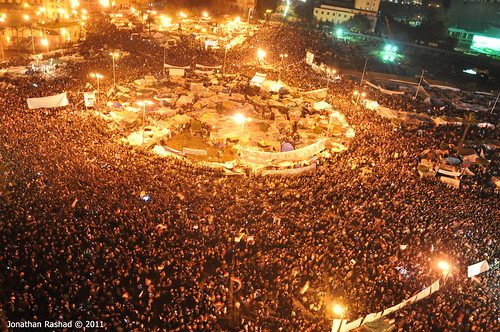
Large public demonstrations have occurred in the last year throughout North Africa and the Middle East as a result in part by the organizational advantages provided by social networking systems. Vast conversations throughout the internet on social media sites such as Facebook, Twitter and YouTube have contributed to uprisings in Tunisia, Lybia, Egypt and Syria. These systems have allowed for conversations to begin and for large groups to organize substantial demonstrations. Social networking sites serve several purposes during such events as the demonstrations in Egypt. Most importantly, networking sites allow thousands of individuals to organize for physical protest, with minimal infrastructure and resources – impossible previously with traditional media. As the proliferation of technology and internet begins to access all corners of the world I anticipate an increase in social uprisings and revolution in unstable regions. In the words of one protestor, “It’s a rehearsal for a bigger thing,” she said. “Right now, we are just testing the power”- http://www.nytimes.com/2009/01/25/magazine/25bloggers-t.html

Oppressive governments around the world will continue to restrict the media digested by their citizens. Social media is no exception, but by virtue of sheer volume – it is less resilient to organized censorship. In Egypt, President Hosni Mubarak broadcasted images of an empty Tahrir square while millions were protesting and documenting the events online. “Newspapers are monitored by the Ministry of Information and generally refrain from directly criticizing Mubarak. And so for young people in Egypt, Facebook, which allows users to speak freely to one another and encourages them to form groups, is irresistible as a platform not only for social interaction but also for dissent.” - http://www.nytimes.com/2011/04/23/opinion/23walker.html?_r=4 As technology continues to propagate throughout the world information and opinions are more readily exchanged and as a result social causes can gain inertia more rapidly. Dissent has been able to organize in cyberspace and is now manifesting physically.

Another major component of social media during these uprisings was to serve as a historian. Bloggers have become journalists and the mobile phone camera has become as powerful as a crew from CNN or National Geographic. Users were creating artifacts of history and distributing them amongst the social networks, contributing to the dynamic record of events. The viral effect these small artifacts created were vast and able to traverse the globe instantly gaining international attention and response. “It added a second layer of discussion and brought a wider audience into what would have been a private exchange. And it gave the event an afterlife on the Web.” - http://www.time.com/time/business/article/0,8599,1902604,00.html#ixzz1P7AMRTAQ

Social media is beginning to serve as a voice for the voiceless in areas of political unrest. What we as society are realizing now is that these movements sparked online can possess real power and the ability to spawn globally significant events. While powerful, social media still has some time before it can overpower the multinational media super corporations. Hopefully in time, these online voices will find an increasing stage and more significant action in response. ”Although social media have been a critical tool for creating political openings, opposition groups need national outlets if durable institutional reforms are to take place in societies that have endured extraordinary manipulation and repression.”- http://www.nytimes.com/2011/04/23/opinion/23walker.html?_r=3

Wednesday, June 8, 2011

Response to Crisis in a Networked World

Response to Crisis in a Networked World
View PDF

It is our hope that emergency management can directly benefit from cyber-enabled analytic approaches, not only in terms of the investigative findings that address changing sociotechnical behaviors in such situations, but also because these same integrations and visualizations support the kind of real-time analytical activity that both members of the public and emergency managers already perform. Such a human-centered computing approach is at the foundation for reframing the information dissemination activities of emergency response as a collectively intelligent activity” -Crisis in a Networked World: Features of Computer-Mediated Communication in the April 16, 2007, Virginia Tech Event

This conclusion is interesting and provocative. While this paper focuses on the social media artifacts after the event, I am compelled to think of how social media could be used to prevent such calamities and minimize loss during such events.

In 2009, an MIT project entitled Gaydar rattled the media. The student developed program crawled social networking sites and was able to determine the sexual preference of a user with an 85% accuracy. The software “examines what the connections between people can tell us, from predicting who might be a terrorist to the likelihood a person is happy, fat, liberal, or conservative. “ - http://yro.slashdot.org/story/09/09/20/1753254/MIT-Project-Gaydar-Shakes-Privacy-Assumpitons Given the accuracy of such preliminary algorithms, this seems to be an area of study in need of additional investment. Perhaps algorithms could have determined that Seung-Hui Cho was severely disturbed, flagged him and notified the school... After all, he had sufficiently archived his troubled mind on the internet :
Facebook already uses facial recognition software to tag photos, and Google's first for-profit technology deals with facial recognition. Why not dispatch these applications to identify fugitives and missing persons? Clearly, implementation of this type of social data mining and social profiling is highly controversial. In my opinion, it should not be. Users of the internet need to understand that once information and media hits the cloud it is public. As Hal Abelson, the advising professor for project Gaydar was quoted : "That pulls the rug out from a whole policy and technology perspective that the point is to give you control over your information — because you don't have control over your information."

Another pre-implementation of social media in disaster scenarios would be the integration of alert systems with first responders. In my opinion, there is no reason why Facebook and Twitter at least should be integrated with 911 systems. There was an incident in Aug 2010 where a woman typed an IM conversation on her laptop with her toes after being tied up by an intruder http://www.cbsnews.com/8301-504083_162-20012683-504083.html . How about a Twitter hashtag #911 that pickups up your IP address for location, or GPS coordinates from your phone and dispatches help. Perhaps the most obvious implementation of social media for disaster response and prevention would be the integration of the EAS. When there is a tornado, flood, warning – why not SMS all mobile users in the area?


Emotional Response, A Vision of Students Today


Emotional Response, A Vision of Students Today

This video created an emotional response within me as it articulated several frustrations in my everyday life. The information conveyed in the video is disturbing: the average student today has 26.5 hours of daily obligations, graduates $20,000 in debt, writes over 600 pages of text annually and most are studying for careers and jobs that do not exist today. The video poses the question of whether technology will be our savior or destroyer? Is technology the villain? I rather, believe that while technology adheres to Moore's law – doubling in speed and efficiency every 18 to 24 months, the academic institutions of the world have failed to adopt the same exponentially compounding paradigm.

Over-connectivity leads to over-commitment in my opinion. In the modern world, a terminal with an internet connection is always close by. For many Americans, the internet remains within their pocket at all times of the day. The availability of information has created a social expectation to be "online" at all hours of the day. The pressure to remain connected and maintain multiple simultaneous conversations is omnipresent; the result being iAnxiety and mild schizophrenia resulting from the maintenance of many online personalities. The sheer volume of correspondence can be a major detriment to students.

The quote at the beginning of the video is fantastic and characterizes the disenfranchisement of the modern student. : "Today's child is bewildered when he enters the 19th century environment that still characterizes the educational establishment where information is scarce but ordered and structured by fragmented, classified patterns, subjects, and schedules." -Marshal McLuhan. In many ways, students are not compelled to engage in the academic process since it has no relevance to the society in which they live, nor is information conveyed in the ways it is currently digested. In order for students to have a pertinent education, they must communicate and learn the way that society does as a whole. Well said in the video as the camera pans through the seats of a lecture hall – "If students learn by doing, what am I doing here?"

As the internet continues to propagate, academic and professional competition will continue to increase. Students are caught in the knee of this curve. Quality education is now readily available online, MIT's entire undergraduate catalog is now online. Once again, this creates an elevated expectation of today's students to digest all resources available throughout the cloud. This also expands the competitive arena of an institution globally. What we are seeing is the beginning of globalization of the academic sector. While the expansion of freeware education is socially beneficial – most traditional institutions have yet to modify their models given their existence. For example, if MIT can offer students a complete curriculum for free with exquisite presentation materials, lecture videos, notes and exams – other universities necessarily should at least match the quality of these deliverables for their own students who are paying for their educations. As the video identifies, the massive lecture hall with notes on a chalkboard is obsolete if not cruel. Otherwise, in several years there will be two groups of graduates – 1. freeware graduates with high quality education received from the prestigious institutions of the world and 2. traditional graduates, severely in debt with a sub par education from a single institution.

The current academic generation is feeling the full affects of over-connectivity, globalization and academic disenfranchisement. These truths do not illustrate a flaw in technological progression but the inability of societies and organizations to adapt new robust methods of communication. Recall that it took homo sapiens thousands of years to create drawing tools and even begin to establish a recorded history. We are now at a similar turning point where our written history and our access to it has become increasingly difficult to manage and process.

Thursday, June 2, 2011